

Chemical Peeling
A chemical peel is one of the most effective treatments for naturally regenerating the skin, solving skin problems, improving its quality, and rejuvenating it.

Chemical Peeling
A chemical peel is one of the most effective treatments for naturally regenerating the skin, solving skin problems, improving its quality, and rejuvenating it.




Why is a chemical peel an essential treatment?
Many people wonder if at-home mechanical scrubs, regular cleansing, and the right choice of creams and serums are enough to keep their skin radiant and glowing. Unfortunately, the effects of creams and serums are mostly limited to the skin's surface.
The oldest skin cells, which form the so-called "dead" skin layer, prevent active substances from penetrating into the deeper layers. With a chemical peel, we remove this superficial skin layer, which helps regeneration, improves skin quality, and stimulates collagen and elastin—the key components for a youthful appearance. After a chemical peel, the skin's absorption is better, so at-home skincare products and other treatments (mesotherapy, biorevitalization, PRP) become more effective.
A chemical peel, or exfoliation, involves removing the upper layer of the skin—specifically, its dead cells. Dead cells on the skin ruin its appearance, worsen the complexion, slow down the penetration of nutrients into the deeper layers of the epidermis, and reduce overall skin tone.
Using acids, a chemical peel removes dead skin cells and allows active ingredients to work—stimulating collagen production, improving tone and texture, and clearing up acne.
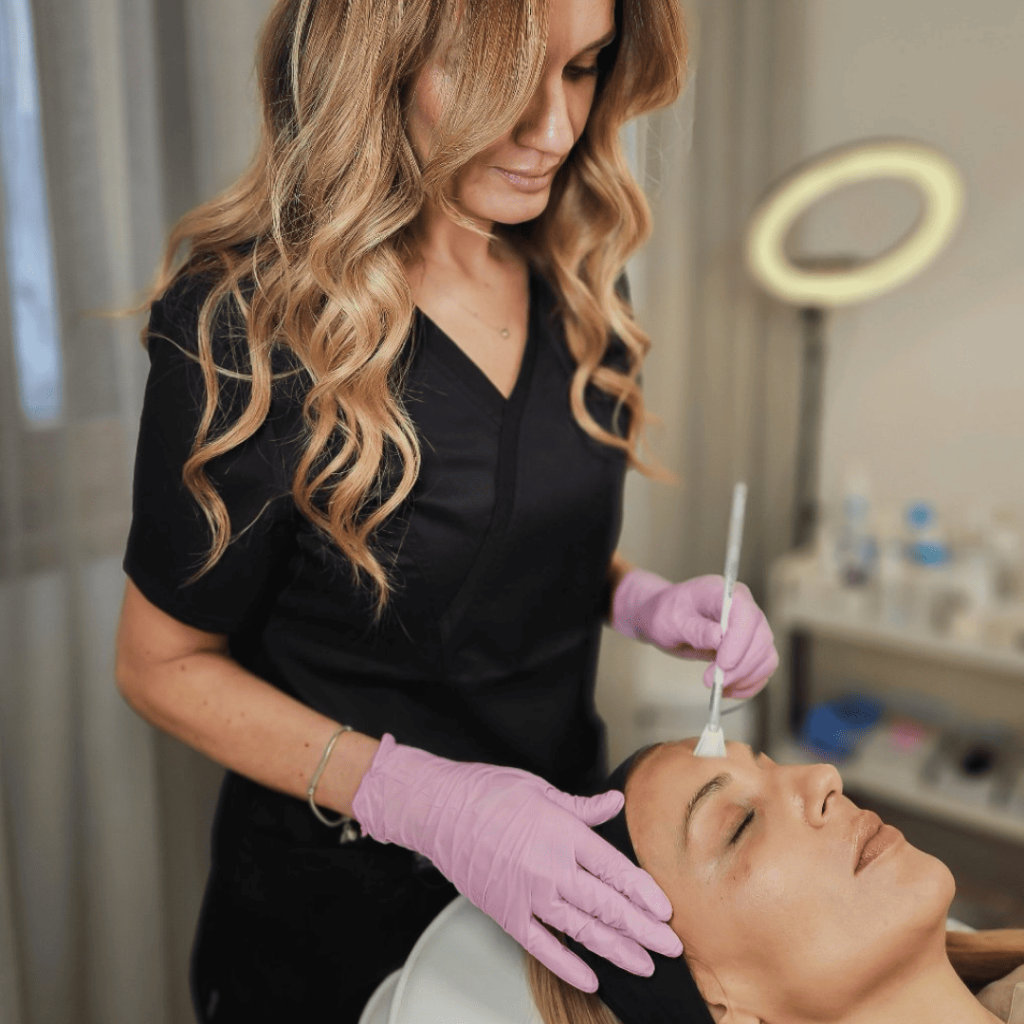
What a treatment looks like?

Recovery period after the treatment
In the days following the treatment, your skin may start to peel, which is normal as the skin regenerates. It's crucial to use a high-SPF sunscreen, regardless of the season. The doctor will certainly draw your attention to this and give you recommendations for adequate at-home care after the treatment.
For more pronounced problems, a medium-intensity chemical peel is needed. This type of peel helps to smooth wrinkles, remove age spots, scars, and acne, while also brightening and refreshing the skin.
What types of chemicalpeels are there?
There are several types of chemical peels, which differ depending on the problem being treated and the depth of their action.
The deeper the peel, the longer the recovery time, but the stronger the effects.
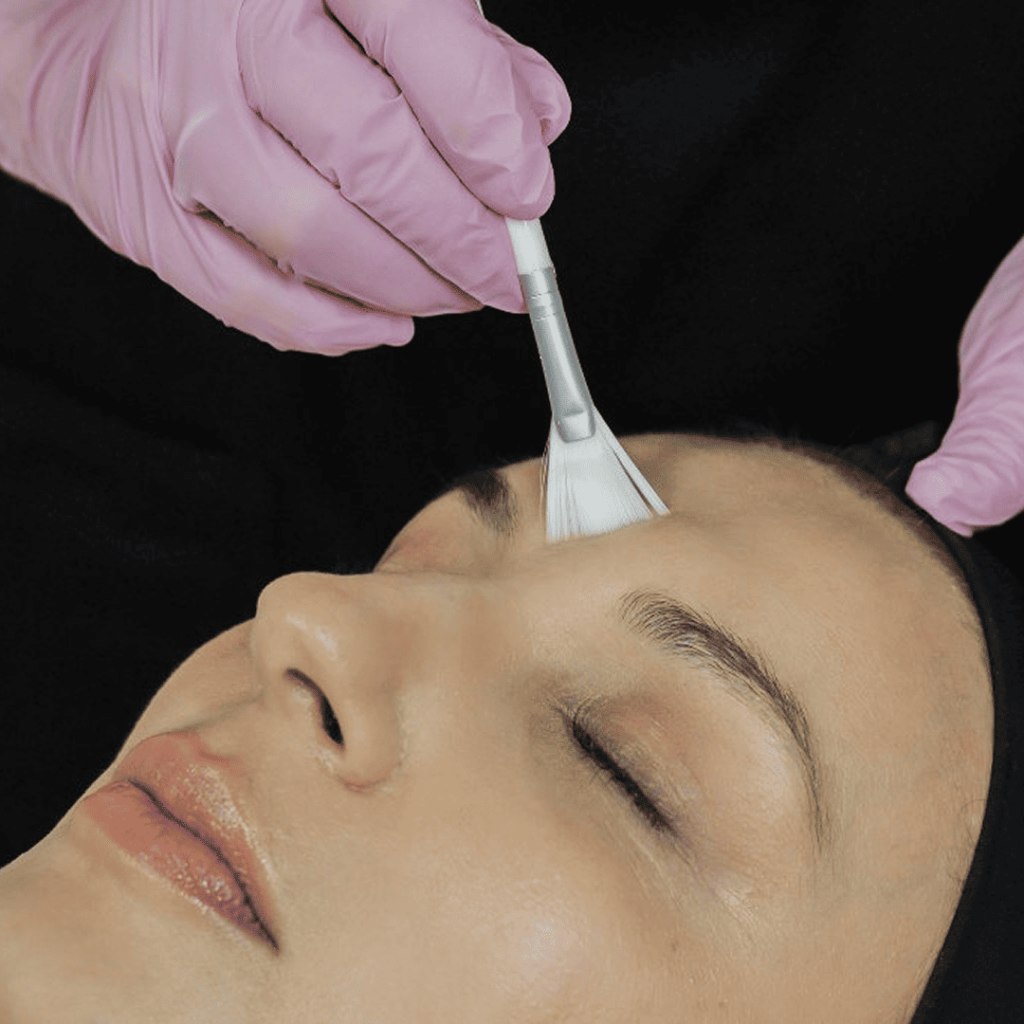
Superficial peels are for everyone
This is the "gentlest" way to refresh and rejuvenate the faceneck, and décolletage. Lactic and fruit (AHA) acids, glycolic acid, or 10-15% trichloroacetic acid are used.
A superficial peel helps improve skin color and texture and is effective in the fight against acne and seborrhea. It is most often recommended for people with oily and problematic skin, as it gently exfoliates the skin, removes blackheads, and reduces hyperpigmentation.
A brief overview of the most important acids
| GLYCOLIC | SALICYLIC | RETINOIC | TCA | |
|---|---|---|---|---|
| Exfoliation | YES | YES | YES | YES |
| Acne | YES | YES | YES | NO |
| Anti-aging effect | YES | NO | YES | NO |
| Hyperpigmentation | YES | NO | YES | NO |
| Pores | YES | YES | YES | NO |
| Acne scars | NO | NO | NO | YES |
| Collagen synthesis | YES | NO | YES | YES |
Everything you need to know about chemical peels


What's the price of chemical peel in A Med?

Ready for a change?
Schedule a free consultation with Dr. Ana to discover the most effective procedures for achieving your desired results.